What to consider when buying a marquee tent
A practical buyer's guide to choosing the right marquee tent — size, frame type, material and the questions to ask before you invest.
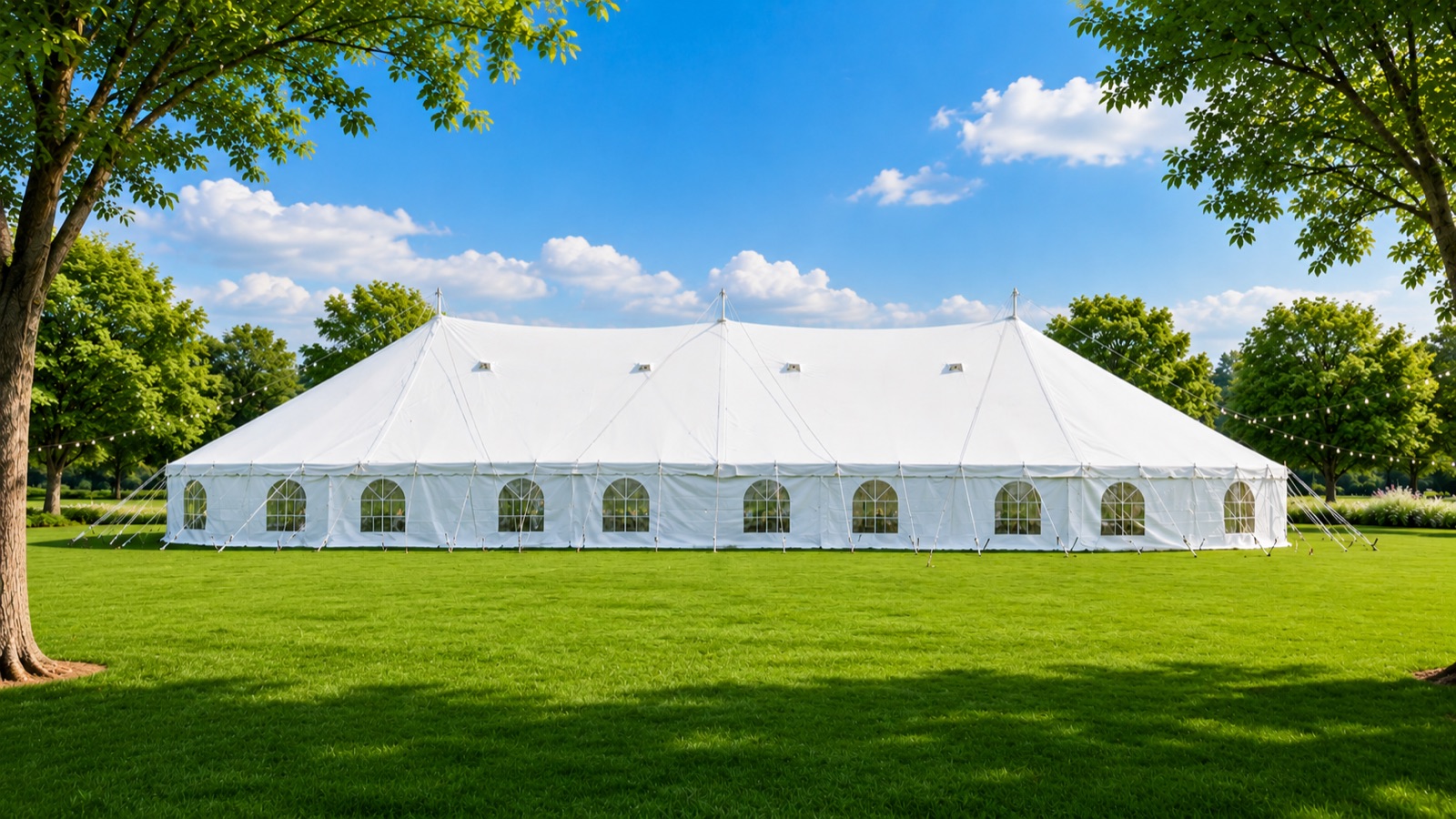
Buying a marquee tent is a genuine long-term investment. The right choice will serve you for well over a decade — through Highveld thunderstorms, mid-summer heat and the relentless pressure of regular commercial use. The wrong choice will be expensive, frustrating and back in for repairs far sooner than you planned. This guide walks you through the four decisions that matter most, in the order you should think about them.
Step 1: Define your use case first
Before you look at a single product, be clear on what you need the tent to do. The answers to four questions should drive every other decision:
- How many people? Guest count, and whether they'll be seated (banquet or theatre) or standing, directly determines the floor area you need.
- How often will it be erected? A tent that goes up twice a year has different durability requirements from one erected every weekend for a hire company.
- What kind of venue? An open field, a garden, a paved surface, or a site where interior poles would be a problem — each scenario steers you to a different frame type.
- What's the climate exposure? A tent in the Western Cape rain belt faces different demands from one used exclusively in Gauteng. UV, wind and rainfall all affect spec decisions.
Getting these answers right at the outset prevents the most common and expensive mistake: buying a tent that is the right size but the wrong type for the application.
Step 2: Understand the frame types
Peg & pole marquees
The peg and pole marquee is the classic design that has been used for outdoor events across South Africa for generations. Steel or aluminium centre poles carry the roof load; guy ropes and ground pegs provide stability. They are cost-effective for the floor area they provide, visually elegant, and straightforward to erect by an experienced team. Interior poles are part of the aesthetic, but they do create obstructions to the floor layout — something to factor into your seating plan. Peg and pole marquees are ideal for estates, sports clubs, event hire companies and any application where the ground is open enough to allow pegging.
Framed marquees
A framed marquee uses an aluminium frame structure that carries the roof and side wall loads internally, eliminating the need for interior poles and external guy ropes. The result is a completely clear floor span — every centimetre of the interior is usable without obstruction. Framed marquees can be erected on hard surfaces, require no pegging into the ground, and are structurally stiffer in adverse weather. They cost more than a peg and pole of equivalent size, but for venues where internal poles are unacceptable, or where erection on paving or concrete is required, a framed marquee is the correct choice.
Stretch tents
Stretch tents use an elasticated PVC or polyester fabric that is tensioned between anchor points — poles, trees, walls or purpose-built frames — to create flowing, organic shapes that are visually distinctive. They are popular for weddings, corporate events and lifestyle functions where aesthetics are a priority. Because the shape is created by the tension pattern rather than a rigid frame, every installation looks unique. The trade-off is that stretch tents are less modular than framed or peg and pole designs and require more experience to install correctly.
Step 3: Size correctly for your guest count
Sizing is where buyers most often err on the wrong side. Allow insufficient space and the event feels overcrowded and uncomfortable; allow too much and you have paid for unused cover. As a rough planning guide for standard rectangular marquees:
| Layout style | Floor area per person | Notes |
|---|---|---|
| Theatre / church rows | 0.8 – 1.0 m² | Most space-efficient; no tables |
| Banquet (round tables) | 1.5 – 2.0 m² | Allow extra for dance floor / staging |
| Cocktail / standing | 0.75 – 1.2 m² | Varies with density preference |
| Conference / classroom | 1.8 – 2.5 m² | Tables require significant depth |
These are planning estimates only. Add 15–20% for buffer space around the perimeter, and factor in any staging, sound equipment, catering stations or dance floors before finalising your tent size. When in doubt, go one size up — a slightly generous tent is always a better guest experience than a slightly tight one.
Step 4: Material quality — the decision that determines lifespan
This is where cheaper imports consistently catch buyers out, and where the long-term cost of a cheap marquee tent exceeds the cost of a quality one within a few seasons. The marquee fabric — and the quality of the PVC used to manufacture it — determines how the tent performs in every condition it will face.
What to look for in a quality marquee tent fabric:
- PVC grade and coating weight: heavier, better-specified PVC resists UV degradation, tears and abrasion. It holds its colour and flexibility through years of South African sun.
- Weave base cloth: a Panama or Oxford weave provides dimensional stability and tear-resistance that thin or sparsely woven base cloths cannot match.
- UV stabilisers: without proper UV additives in the PVC compound, the fabric bleaches, stiffens and eventually cracks. South Africa's UV index makes this non-negotiable.
- Seam construction: tent panels should be joined with welded seams (RF or heat-welded) that are truly watertight. Stitched-only seams allow water ingress over time.
- Hardware quality: galvanised or powder-coated poles and fittings, correctly rated for the span, make the difference between a tent that stands safely and one that fails in wind.
At Midrand Tarp & Tent, we manufacture every marquee at our Midrand, Gauteng factory using South-African PVC on a robust Panama-weave base cloth. We have been doing exactly this since 1999 — and the reason customers return to us for their second and third tents is that the first one is still serving them well.
Questions to ask any marquee tent manufacturer
Before you commit to a purchase, ask these questions directly:
- Where is the tent manufactured, and where is the PVC sourced from?
- What is the PVC coating weight (gsm) and does it carry UV stabilisers?
- Are seams welded or stitched?
- What warranty covers manufacturing defects?
- Is there aftercare, repair and replacement panel service available?
- Can I visit the factory and see a tent of this size erected?
A reputable manufacturer who builds locally — as we do from our Midrand facility — will answer every one of these questions directly and with confidence. If the answers are vague, or you are simply directed to a product brochure, take that as useful information.
Ready to spec your marquee?
Tell us your guest count and event type — we will recommend the right tent and quote within 24 hours.