Choosing the right cover for your needs
Not all covers are equal. A quick guide to matching the right tarpaulin or cover to the job — and why quality pays off.
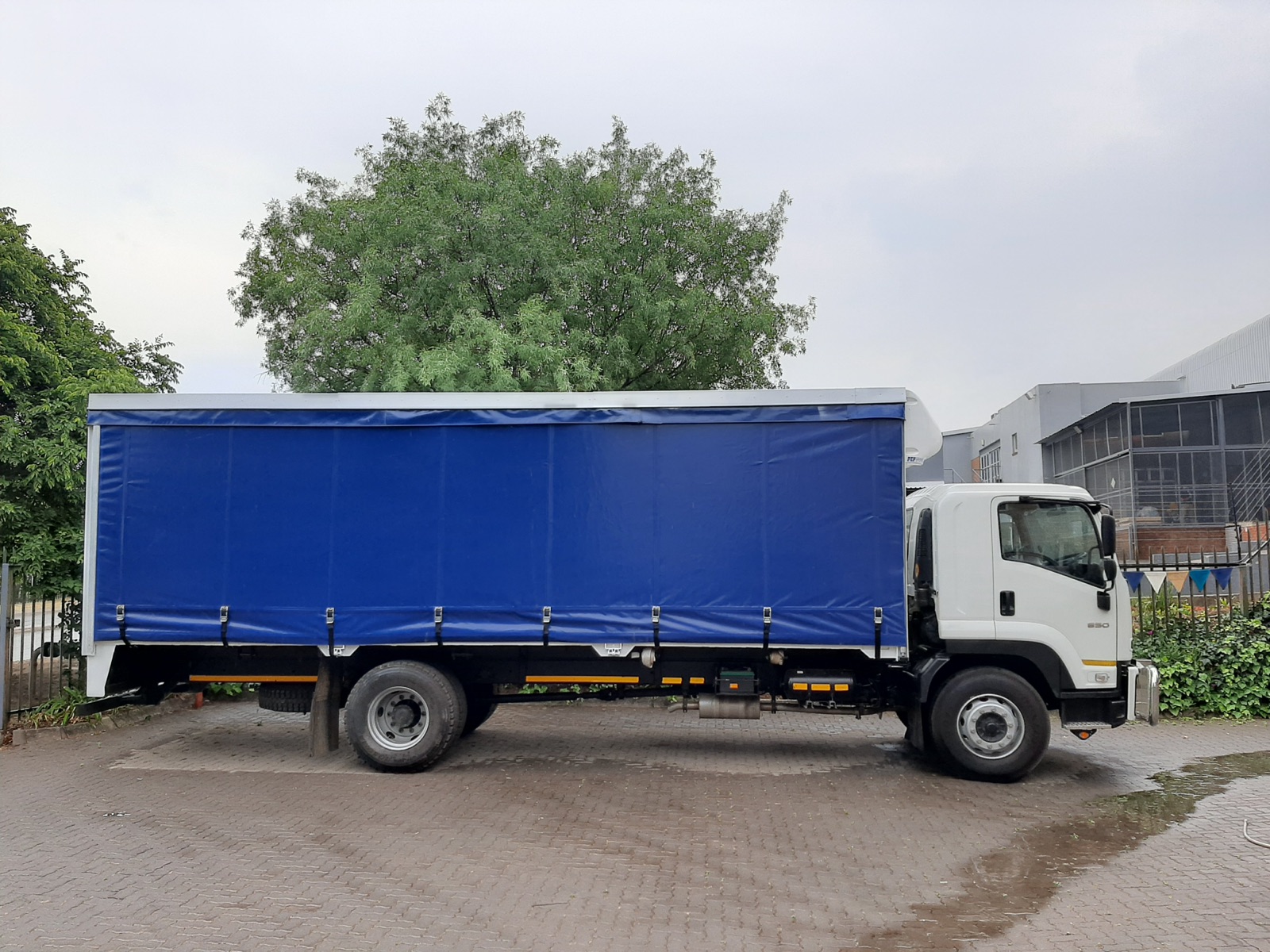
"A cover is a cover" is one of the most expensive assumptions you can make in any industry that relies on protecting assets. The right cover for a given job depends on what you are protecting, the environment it will face, how often it needs to be installed and removed, and how long it needs to last. Getting those variables right leads to a product that justifies its cost. Getting them wrong leads to early replacement, damaged goods and unnecessary expense.
As a South African PVC cover and tarpaulin manufacturer based in Midrand with over twenty-five years of experience, we have helped customers across transport, mining, construction, events and general industry find the right cover for their specific application. This guide shares what we have learnt about making that match correctly.
The four questions that determine the right cover
Before looking at materials or specifications, work through these four questions:
- What are you protecting? A loose bulk load needs breathability and tear-resistance; a palletised cargo requires waterproofing and UV stability; industrial equipment needs abrasion resistance as a priority.
- What conditions will the cover face? Constant flexing in transport is a fundamentally different demand from static outdoor storage. Wind exposure, rain, UV intensity, and proximity to chemicals or abrasive materials all influence the correct spec.
- How often will it be fitted and removed? A tautliner cover on a working truck may be opened and closed dozens of times a week; a storage tarp on a stockpile may stay in place for months at a time. Cycle frequency affects the required flexibility and edge durability.
- How long does it need to last? A one-season temporary cover can be lighter and cheaper. A commercial cover that must perform for five or ten years requires a properly specified PVC with UV stabilisers and quality edging.
Matching the cover type to the application
Transport: tautliner skins, tipper tarps and truck covers
Transport covers experience the harshest combination of demands: constant flexing, wind buffeting, road vibration, UV exposure, diesel and oil contamination, and the physical stress of repeated fitting and removal. The PVC must remain flexible in cold conditions, resist cracking in heat, and not stiffen to the point of brittleness after a season of sun. For tautliner skins, the fit to your specific trailer bows and tracks is also critical — an ill-fitting cover creates flutter, which rapidly destroys the fabric at the stress points.
Tipper tarps must also resist the abrasion of the loads they cover — sand, gravel and aggregate are unforgiving on thin or poorly coated PVC. A heavier-coated tarp with welded rather than stitched edges is the right choice here.
Storage: flat tarps and stockpile covers
Static storage applications — covering equipment yards, construction materials, timber and open-air stock — place the greatest demand on UV stability and waterproofing. The cover may sit in direct sun for weeks or months without being moved. In these conditions, a PVC without proper UV stabilisers will bleach, stiffen and crack. The seams and eyelets also see sustained tension from wind lift, making reinforced edges and quality eyelets critical.
For large stockpiles, overlapping panels with adequate eyelet spacing for tie-down ropes are important. For bulk loads that require some air circulation, a more open-weave net cover may be appropriate rather than an impermeable PVC sheet — we can advise on the distinction.
Events and marquee tents: appearance and weatherproofing together
Event covers — marquee tent fabric, sidewall PVC, and decorative shade structures — add appearance to the list of requirements. The fabric must shed water cleanly and resist the formation of puddles on the roof, look good from the inside as it diffuses light, and withstand the physical stress of erection, transport and storage many times over. Colour retention matters here in a way it does not for industrial covers.
For events, we recommend purpose-manufactured marquee PVC with a good light diffusion quality — the difference between a comfortable, evenly lit interior and a harsh, bright space is largely in the fabric specification.
Custom and industrial applications
Many applications do not fit neatly into a standard product category. Pond liners, welding screens, machine covers, temporary partition curtaining, industrial dividers and bespoke equipment covers all require custom specification. In our experience, describing the application in detail — the environment, the demands and the expected service life — produces a better brief than trying to match the job to an existing product type. We are manufacturers, not distributors, so custom is where we are most useful.
Why PVC grade is the most important single decision
Across all cover types, the single most consequential specification decision is the grade and quality of the PVC. A cover that costs less because it uses inferior PVC — thin coating, no UV stabilisers, poorly bonded to the base cloth — will fail earlier, need replacing sooner and often damage the goods it was supposed to protect in the process. The total cost of ownership of a cheap cover is almost always higher than that of a quality one.
We manufacture using South-African-sourced PVC on a Panama-weave base cloth. This is a deliberate choice: South African UV conditions are among the most intense in the world, and a PVC compounded and tested for those conditions will outperform a product specified for a milder climate and then imported into the South African market.
Key takeaways
- Match the cover type to the demand profile — transport, storage, events and industrial applications have different primary requirements.
- UV stability is critical for any cover used outdoors in South Africa. It is not optional.
- Welded seams outperform stitched seams for waterproofing over time.
- Edge reinforcement and eyelet quality determine how long a cover lasts under tension.
- Custom sizing is almost always better than adapting a standard size — a cover that does not fit the job properly fails sooner and is less effective.
- A local manufacturer who understands your climate and application is a significantly better resource than an importer who does not.
Not sure which cover is right for your application? Describe the job to us — material, dimensions, environment and service-life requirement — and we will recommend the correct specification and quote within 24 hours.
Not sure which cover is right for your job?
Describe the application and we will recommend the correct specification and quote within 24 hours.