Things to consider when planning an event in a marquee
Location, ground, access, power and layout — the practical checklist that makes a marquee event run smoothly.
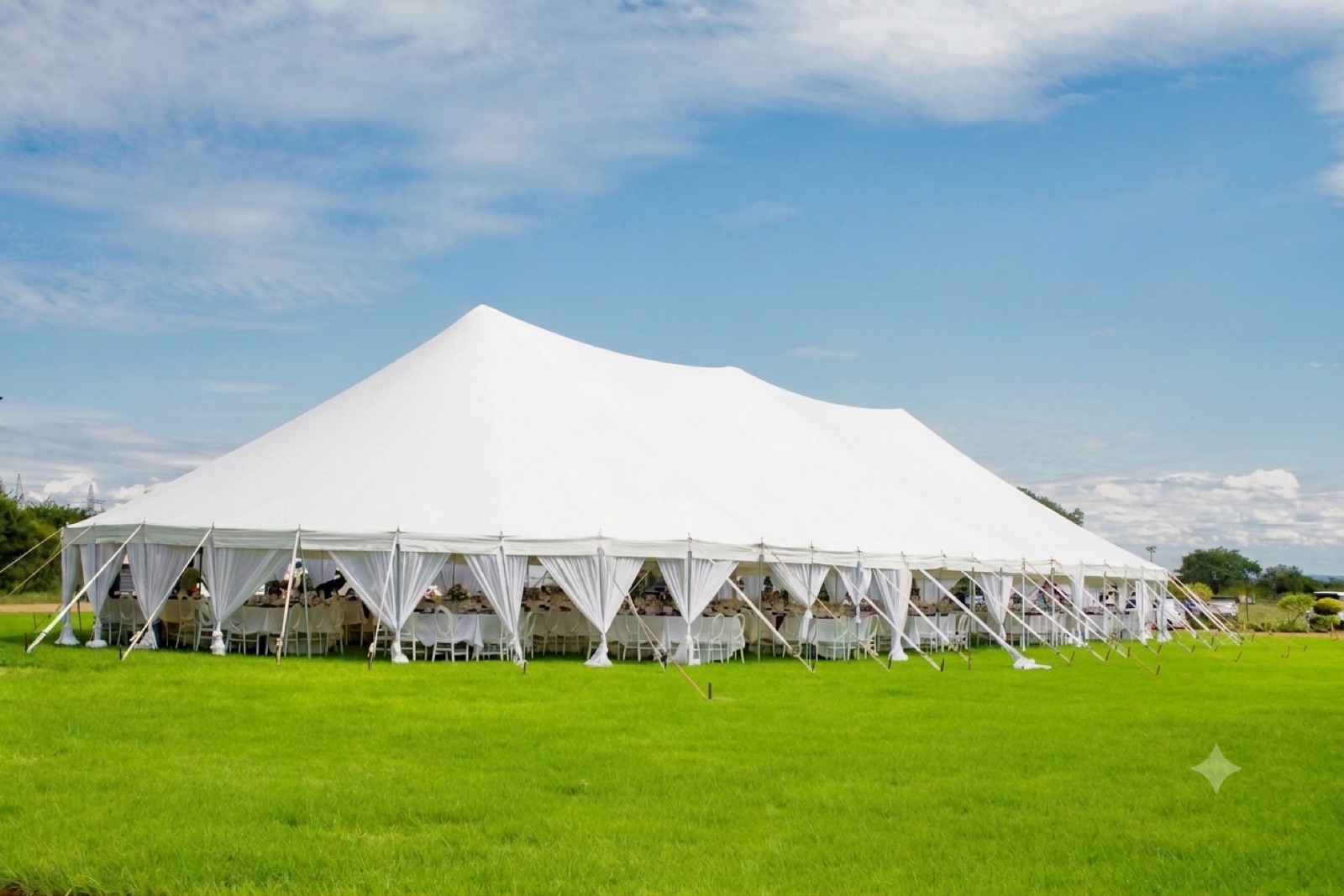
A marquee tent gives you a blank canvas — and that is both its greatest strength and its most demanding characteristic. Unlike a fixed venue, a marquee requires you to think through every element from first principles: the ground it stands on, the power that feeds it, the routes people will use to enter and leave, and the layout that makes the event flow naturally. A little thought up front saves considerable scrambling on the day.
This is the planning checklist that experienced marquee tent operators and event co-ordinators across South Africa work through for every installation — whether it is an intimate wedding for 80 guests or a large corporate day for several hundred.
1. Site selection and ground conditions
The site is the foundation of everything. The ideal marquee surface is level, well-drained and firm enough to support the anchoring system without waterlogging after rain. Slight gradients are manageable; steep slopes are not, and should prompt a conversation about whether the site is viable or whether raised flooring is required to create a level interior.
Ground type and anchoring
Different ground types call for different anchoring approaches:
- Grass and soft soil: The standard for peg & pole marquees. Steel pegs are driven to the correct depth and angle for the conditions. After heavy rain, peg holding strength reduces — plan for a post-rain inspection.
- Hard ground or paving: Framed marquees and some peg & pole configurations can be ballasted using water-filled blocks or concrete weights rather than pegs. This is common in urban settings, parking areas and on existing patios.
- Sandy or loose soil: May require larger or more numerous anchor points. Advise your marquee manufacturer of the ground conditions so the correct specification is used.
Underground services
Before any pegging takes place, confirm the location of underground pipes, irrigation lines, cables and any services on the site. Driving pegs through an irrigation line or electrical cable causes expensive, potentially dangerous problems. On any managed property or municipal land, obtain a confirmation or site plan before installation begins.
2. Access: delivery, rigging and guest arrival
Access is often underestimated until the delivery truck cannot get to the site. A marquee tent is a substantial structure — poles, canvas bags, fittings and guy ropes — and requires a vehicle with sufficient access to offload close to the installation point. Assess access before confirming any booking:
- Can a panel van or light truck reach the installation site directly?
- Are there gates, low-hanging trees, soft verges or narrow paths that could restrict access?
- Is there a suitable turning or parking area for the delivery vehicle?
- Who is responsible for managing access on the installation day?
Separately, plan the guest access flow from the outset. The entrance location affects where you position reception areas, welcome signage, coat racks, first-aid stations and security. A marquee with a single entrance at one end of a large structure can create significant bottlenecks at the start and end of an event — particularly if guests are in formal wear navigating a grass site in the dark.
3. Power and lighting planning
Power is one of the most important — and most frequently underplanned — aspects of a marquee event. Unlike a fixed venue with built-in distribution, a marquee site requires you to bring power to the tent from a source (mains supply, generator or both) and distribute it to every point that needs it.
Planning your power supply
- List every powered element: lighting, sound system, catering equipment, bar fridges, charging stations, AV, décor, heating/cooling.
- Calculate the total load (in kilowatts) and ensure the supply — whether mains or generator — is adequately rated with suitable overhead.
- Use a qualified electrician to run supply cables, install distribution boards and connect equipment. This is non-negotiable for events of any scale.
- Plan cable routes from the start: cables across foot-traffic areas must be covered or elevated to eliminate trip hazards.
- If using a generator, position the exhaust away from any marquee openings and ensure it is silenced or located far enough from the event space that noise does not carry.
Lighting inside a marquee
Lighting shapes the atmosphere of a marquee event more than almost any other element. A well-lit marquee at night can be extraordinary; a poorly lit one feels flat and institutional. Plan your lighting in three layers: ambient (overall illumination), task (tables, bar, catering), and accent (décor, staging, entrance). LED festoon lights, par cans and battery-powered up-lighters are popular in South African marquee events and generate minimal heat — an important consideration in a closed canvas structure during summer.
4. Layout: size the experience, not just the headcount
The most common marquee planning mistake is sizing the tent for the number of guests and nothing else. Every functional element of your event needs floor space — and those elements add up quickly. Work through each component of your layout before confirming the tent size:
- Seating: Round tables of ten require more space per guest than long trestle tables; cocktail-style standing events need less total area but still require room to move comfortably.
- Dance floor or open space: Typically 30–40% of the seating area for a wedding reception, positioned centrally or adjacent to the stage.
- Stage or presentation area: Allow for equipment, operator space and any cabling runs to front-of-house.
- Bar and catering positions: A bar serving 200 guests needs a substantial footprint — counter, back-of-bar storage, and a staff working area.
- Catering kitchen or service area: External catering operations need a covered prep and service area, separate from but connected to the marquee interior.
- Aisles and emergency exits: Minimum 1.2 m aisle width; primary access routes should be at least 1.8 m wide.
- Décor installations: Photo walls, floral arches, welcome tables and styling elements all occupy floor space that guests then cannot use.
The general rule: once you have your guest count and event format clear, draw a rough floor plan to scale before selecting a tent size. You will almost certainly discover the tent you initially budgeted for is too small once all functional elements are placed.
5. Timing: when to book and when to install
For manufactured marquees — tents built to your specification rather than pulled from hire stock — allow 10–14 working days from order confirmation for standard sizes. Custom dimensions, printed canvas or unusual configurations may require longer. Ordering as early as possible also gives time to confirm sizes and site conditions, which is strongly recommended for any event larger than a small private function.
Allow sufficient installation time before the event: a large multi-bay marquee can take a full day or more to rig correctly. Plan for the tent to be up and structurally complete at least 24 hours before any décor or catering begins inside — this allows for adjustments, an anchor check after any overnight rain and a practical run-through of the layout before the decorating team arrives.
Key planning checklist
- ✓ Site assessed: level, drained, access confirmed, underground services located
- ✓ Ground type confirmed and anchoring method specified
- ✓ Floor plan drawn to scale with all functional elements placed
- ✓ Tent size confirmed based on layout, not just headcount
- ✓ Power supply calculated and electrician engaged
- ✓ Lighting plan complete across ambient, task and accent layers
- ✓ Cable routes planned and covered where crossing foot traffic
- ✓ Installation scheduled with adequate lead time before event
- ✓ Emergency exits identified and clear; fire extinguishers positioned
- ✓ Weather contingency plan in place with named responsible person
Let's plan your event together
Share your date, location and guest count. We've been advising on marquee setups across South Africa since 1999 — and we'll quote within 24 hours.